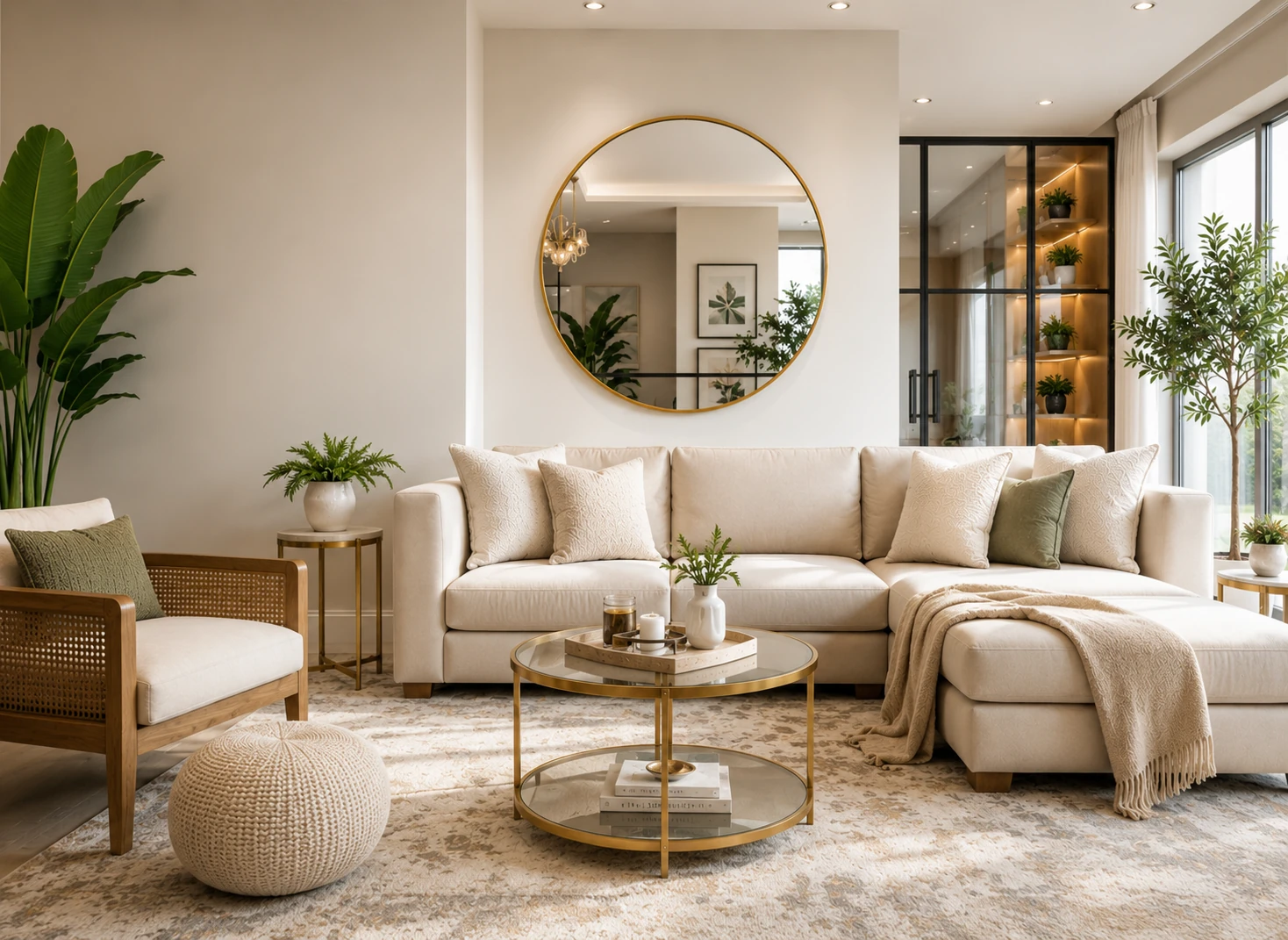
A beautiful interior is not created by a single element. It is created by the way different materials, textures, colours, and lighting work together.
Among the many elements used in modern interior design, mirrors, glass, and lighting have a unique ability to transform the appearance and atmosphere of a space.
A mirror can reflect light and create depth. Glass can make an interior feel open and sophisticated. Lighting can highlight architectural details, furniture, textures, and reflective surfaces.
When these three elements are thoughtfully combined, they can create interiors that feel brighter, more spacious, elegant, and visually sophisticated.
Whether you are designing a luxury home, modern apartment, hotel, office, restaurant, salon, or retail space, the combination of mirror, glass, and light can make a remarkable difference.
The Relationship Between Mirror, Glass & Light
Mirror, glass, and light each have their own role in interior design, but their real impact becomes visible when they work together.
A mirror reflects what is already present in a room. Glass allows light to travel through a space while maintaining visual openness. Lighting brings attention to specific areas and creates the mood of the interior.
Think of them as three complementary elements:
Mirror reflects.
Glass connects.
Light enhances.
Together, they can create a balanced and luxurious environment.
1. Mirrors Create Depth and Reflection
Mirrors are one of the simplest ways to introduce visual depth into an interior.
A strategically placed mirror can make a room feel more open by reflecting the surrounding space. It can also reflect natural daylight, decorative lighting, artwork, furniture, or architectural details.
This makes mirrors particularly useful in:
- Living rooms
- Bedrooms
- Dining areas
- Entryways
- Dressing areas
- Hallways
- Hotels and hospitality spaces
- Retail interiors
Large Mirrors for Spacious Interiors
A large wall mirror can become a strong focal point while making the surrounding space feel visually larger.
For example, a large designer mirror placed opposite a window can reflect natural daylight and create a brighter appearance.
Similarly, a statement mirror placed above a console can transform an otherwise empty wall into an elegant feature.
Designer Mirrors Add Personality
Mirrors don’t have to be plain or purely functional.
Designer mirrors can feature:
- Unique shapes
- Decorative frames
- Premium finishes
- Geometric patterns
- Curved designs
- LED lighting
- Custom dimensions
The right design can complement the furniture, architecture, and overall interior theme.
2. Glass Creates Openness and Continuity
Glass has become an important material in modern interior design because of its ability to create separation without making spaces feel closed.
Traditional walls can visually divide an interior, while glass partitions can maintain a sense of openness.
Glass can be used for:
- Room partitions
- Office partitions
- Shower enclosures
- Entry partitions
- Doors
- Balustrades
- Decorative features
- Custom architectural applications
Glass Partitions for Modern Interiors
Glass partitions are particularly useful when you want to divide a space while maintaining visual connection.
For example, a glass partition between a living room and dining area can create separate zones without making either area feel enclosed.
In offices, glass partitions can create private work areas while allowing natural light to travel through the workspace.
Different Glass Options
Depending on the design requirement, different types of glass can create different visual effects.
Some popular options include:
- Clear glass
- Fluted glass
- Frosted glass
- Tinted glass
- Lacquered glass
- Switchable glass
- Decorative glass
Each option can contribute differently to the appearance and functionality of an interior.
3. Lighting Brings Everything to Life
Even beautiful mirrors and glass elements need the right lighting to reach their full potential.
Lighting can completely change how materials, textures, and surfaces appear.
A carefully planned lighting scheme can highlight:
- Designer mirrors
- Glass partitions
- Feature walls
- Architectural details
- Artwork
- Furniture
- Decorative objects
Warm Lighting for Luxury Interiors
Warm lighting can create a comfortable and sophisticated atmosphere.
When warm light interacts with mirrors and glass, it can create attractive reflections and add depth to the room.
This is especially effective in:
- Living rooms
- Bedrooms
- Dining areas
- Hotel interiors
- Restaurants
- Luxury retail spaces
LED Lighting and Mirrors
LED-lit mirrors are another example of how mirror and lighting can work together.
An LED mirror can provide practical illumination while also becoming a contemporary decorative element.
They can be particularly useful in:
- Dressing areas
- Bathrooms
- Bedrooms
- Salons
- Hospitality spaces
4. Use Mirrors to Enhance Your Lighting Design
One of the most effective ways to combine mirrors and lighting is to use the mirror as part of the overall lighting strategy.
A mirror placed near a wall light, pendant, chandelier, or window can reflect the illumination and create additional visual brightness.
For example, imagine a dining room with a statement chandelier and a large decorative mirror on the opposite wall.
The mirror can reflect the chandelier and surrounding décor, creating an additional layer of visual interest.
Backlit Mirrors
Backlit or LED-lit mirrors can also create a soft glow around the mirror.
This can add depth to the wall and create a modern, premium appearance.
The lighting should complement the mirror rather than overpower it.
5. Combine Glass and Mirrors for a Contemporary Look
Glass and mirrors can work beautifully together in contemporary interiors.
Both materials have reflective or transparent qualities, which can help create a sense of openness.
For example, a luxury bathroom might combine:
- A large mirror
- Glass shower enclosure
- LED lighting
- Marble surfaces
- Metallic fixtures
The result can be a clean, sophisticated, and visually spacious bathroom design.
Similarly, a modern living room can combine a designer mirror with glass furniture and decorative lighting to create a refined atmosphere.
6. Create a Luxury Entrance with Mirror, Glass & Light
The entrance is the first area people experience when they enter a home, hotel, office, or commercial space.
This makes it an ideal location to combine mirror, glass, and lighting.
Imagine an entrance featuring:
- A designer mirror
- Elegant console
- Glass elements
- Warm wall lighting
- Metallic accents
- Carefully selected décor
The combination immediately creates a more sophisticated first impression.
A large mirror can also provide a practical purpose while enhancing the visual appearance of the entrance.
7. Make Small Spaces Feel More Open
One of the biggest advantages of mirrors and glass is their ability to make smaller interiors feel more open.
A small room can sometimes feel crowded when too many solid surfaces are used.
Introducing glass partitions can visually connect different areas, while strategically placed mirrors can create depth.
Lighting can then be used to highlight these surfaces and make the space feel brighter.
This combination can be particularly useful for:
- Apartments
- Compact bathrooms
- Small offices
- Narrow hallways
- Dressing areas
- Boutique stores
The objective is not to make the space look bigger artificially, but to make it feel more open and visually connected.
Mirror, Glass & Light in Different Spaces
The combination of these three elements can be adapted to almost any interior.
Living Room
Use a large designer mirror as a focal point, complemented by warm lighting and selected glass furniture or décor.
Bedroom
Combine a dressing mirror or LED mirror with soft lighting and glass elements for a calm, contemporary atmosphere.
Dining Area
A decorative mirror can reflect pendant lights or chandeliers, while glass furniture can maintain a light and elegant appearance.
Bathroom
A large illuminated mirror paired with a glass shower enclosure can create a clean and sophisticated bathroom design.
Office
Glass partitions can maintain openness, while mirrors and well-planned lighting can add a more refined appearance to reception areas and common spaces.
Hotels & Commercial Spaces
Luxury hotels, restaurants, salons, boutiques, and retail spaces can use mirror, glass, and lighting together to create memorable interiors and stronger visual experiences.
How Architects and Interior Designers Can Use These Elements
For architects and interior designers, mirror, glass, and lighting can be powerful design tools.
Rather than treating them as separate products, they can be considered part of one overall design concept.
For example:
Glass creates the spatial connection.
Mirror adds reflection and visual depth.
Lighting creates atmosphere and highlights the design.
When planned together, these elements can create a more cohesive interior.
The proportions, placement, finishes, and lighting temperature should all be considered during the design process.
Common Mistakes to Avoid
While mirrors, glass, and lighting can transform an interior, using them without proper planning can produce the opposite effect.
Using Too Many Mirrors
Mirrors should enhance a room rather than make it feel visually confusing.
Choose strategic locations instead of covering every available wall.
Poor Lighting Placement
A badly positioned light can create unwanted glare or harsh reflections on mirrors and glass.
Consider the viewing angle before finalising the lighting position.
Ignoring Proportion
A mirror or glass feature should be appropriate for the size of the space.
The right proportions can make an interior feel balanced and intentional.
Mixing Too Many Finishes
Combining too many colours, metallic finishes, and materials can make a space look cluttered.
Choose a consistent design direction and repeat selected finishes throughout the room.
How to Create a Balanced Look
The secret to using mirror, glass, and light successfully is balance.
You don’t need all three elements to dominate the room.
Instead, allow each element to perform a specific role.
Mirror: Create reflection and depth.
Glass: Maintain openness and visual connection.
Lighting: Create atmosphere and highlight important features.
Then complement them with furniture, textures, colours, and décor.
This approach creates an interior that feels sophisticated rather than over-designed.
Final Thoughts
Mirror, glass, and light are much more than individual interior elements.
When thoughtfully combined, they can transform ordinary spaces into interiors that feel brighter, more open, elegant, and luxurious.
A designer mirror can become a statement feature. Glass can connect different areas while maintaining openness. Thoughtful lighting can highlight both materials and create the right atmosphere.
Whether you are designing a home, office, hotel, restaurant, salon, or retail space, the right combination of these elements can make a lasting impression.
At Shree Darpan – The Mirror Studio, we believe that great interiors are created through thoughtful design and attention to detail.
From designer mirrors and custom-made mirrors to glass partitions, decorative glass, and modern glass solutions, the right materials can help bring your interior vision to life.
If you are planning a new interior project in Lucknow or looking to upgrade your existing space, explore the possibilities of combining mirror, glass, and light to create a space that is both functional and visually beautiful.
Because when mirror, glass, and light come together, a space doesn’t just look beautiful—it feels beautifully designed.
Leave a Reply